Solving Trace Moisture Measurement Challenges in Semiconductor Manufacturing
The semiconductor chip market boasts a promising outlook. Following the challenges posed by the Covid pandemic and cost-of-living crisis—including chip shortages and demand forecasting difficulties—there are encouraging signs that the industry is embarking on a new phase of long-term growth. This momentum is driven by technological advancements and the widespread recognition among governments that semiconductors are critical to future technological development, economic security, and growth.
In Europe, the EU has launched the Chips Act, while in the United States, the 2022 CHIPS and Science Act has been signed into law by the Biden administration. Both pieces of legislation aim to stimulate further growth in the domestic semiconductor industry. For instance, the EU’s Chips Act is expected to unlock approximately €43 billion in new public and private sector investments, supporting future research, expanding manufacturing capacity, enhancing supply chain resilience, and creating new jobs.
Placing semiconductor manufacturing at the core of broader industrial strategies is crucial for supporting the development of markets reliant on ever-increasing computing power and digital capabilities—including 5G, the Internet of Things (IoT), artificial intelligence (AI), autonomous vehicles, and smart cities. It also serves as a key factor in meeting the evolving needs of businesses and consumers.
Meanwhile, innovations in the design and production of semiconductor devices are emerging, including:
- Research and development of carbon nanotubes
- Directed self-assembly block copolymers that reduce pattern gaps below 10 nanometers
- DIC heterogeneous integration
- The use of new composite materials such as graphene to create chips with smaller footprints, greater computing power, and even lower energy consumption.
Miniaturization Drives Higher Quality Assurance Requirements
As chip sizes shrink and complexity increases, manufacturing processes must become more sophisticated with stricter specifications and production tolerances. In turn, this increases reliance on the performance of sensors and instruments that monitor and control process conditions, minimizing the risk of reduced yields or entire batches of chips being scrapped.
In particular, the exact purity of the various special ultra-high-purity gases used in semiconductor manufacturing is critical to the success of every stage of the semiconductor production process—from deposition, lithography, and etching to doping, annealing, and chamber cleaning.
The Key to Detecting Humidity Control Quality
Trace moisture content in process gases is a decisive factor in determining the efficiency, consistency, and quality of OEM production processes—and thus the potential output value. Trace moisture can cause a range of hard-to-detect issues, including oxidation, photoresist adhesion problems, and challenges in characterizing and predicting consistency across each process stage.
Traditionally, detecting trace moisture using precision dew point measurement has been problematic, requiring complex and expensive humidity analyzers and analytical techniques. Many of these issues have been addressed with the development of relatively low-cost online ceramic metal oxide dew point sensors. These sensors deliver extremely accurate, responsive instruments capable of detecting trace moisture levels as low as parts per million (ppm) in ultra-high-purity gases.
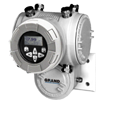
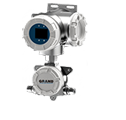
The latest model in this range, the Pura Advanced Online 2, is available as a hygrometer or transmitter for use by semiconductor OEMs across all stages of their production operations. The Pura offers exceptional stability and repeatability, measuring dew points as low as -120 °Cdp with an accuracy of ±1 °C at -60 °Cdp, and can quickly respond to changes in process conditions. Additionally, the new sensor is available in an intrinsically safe version, fully certified by ATEX, UKCA, and IECEx. It is supported by our comprehensive technical, maintenance, and calibration services and can also be provided as part of our sensor exchange program, designed to help OEMs minimize maintenance and downtime.
Instruments like the Pura Advanced Online 2 are critical for semiconductor OEMs, as they are not only key to ensuring the performance of existing production operations but also enablers of future development and manufacturing growth as chips become smaller and more complex.















 Consultation Tel.
 Product Center
 Solution
 Home
Home