









Welcome to Shandong Guruida Automation Technology Co., Ltd.!

water、oxygen、hydrogen  Dew Point Analyzer and System Integration
Professional Overall Solution Services for Analytical Systems
Ultrasonic Flowmeter  Explosion - proof Infrared Thermal Imaging

Home > Solution > Fire prevention in large spaces > Fire prevention for lithium - ion batteries

Fire Prevention of Lithium - ion Batteries

Lithium, an ideal metal for battery manufacturing, has the ability to store a large amount of charge. In recent years, with the surging demand in fields such as new - energy vehicles and new - type energy storage, the global lithium - ion battery market has entered a period of rapid development.
Lithium, an ideal metal for battery manufacturing, has the ability to store a large amount of charge. In recent years, with the surging demand in fields such as new - energy vehicles and new - type energy storage, the global lithium - ion battery market has entered a period of rapid development.
However, if the inner layer of a lithium - ion battery is squeezed and causes a short - circuit, fires and rapid combustion may occur. Zheng Bin, an associate professor at the Department of Fire Engineering of the Chinese People's Police University of Disaster Prevention, has analyzed in detail the reasons why lithium - ion batteries are flammable and burn rapidly, mainly involving the following points: First, high energy density. Lithium - ion batteries have a high energy density, enabling them to store a large amount of energy in a relatively small volume. Once the battery experiences thermal runaway, the energy stored in the battery is rapidly released, causing the combustion rate to increase sharply. Second, thermal runaway. When thermal runaway occurs inside the battery, it triggers a series of exothermic chemical reactions. These reactions promote each other, causing the temperature to rise rapidly, which in turn accelerates the speed of chemical reactions, forming a vicious cycle. Third, generation of combustible gases. During the process of thermal runaway, the electrolyte and other chemical substances inside the battery may decompose to produce various flammable and toxic gases, including but not limited to hydrogen (H2), carbon monoxide (CO), methane (CH4), etc. The presence of these gases increases the risk of combustion. Fourth, internal short - circuit. Dendrite growth, diaphragm rupture, or other forms of internal short - circuits inside the battery can lead to a sharp increase in current, generating a large amount of heat, thus triggering a chain reaction of thermal runaway.

Project Application

The concentrated storage of a large number of lithium - ion batteries leads to a high risk of thermal runaway. For example, after the thermal runaway of ternary lithium - ion batteries, the temperature rises rapidly, and the combustion is intense, making the battery prone to disintegration and chain explosions. When lithium iron phosphate materials burn, they generate a large amount of combustible gases and heat, which may trigger the explosion of the mixed gas in a confined space, with disastrous consequences.

In lithium - ion battery storage, the fire risk is prominent.
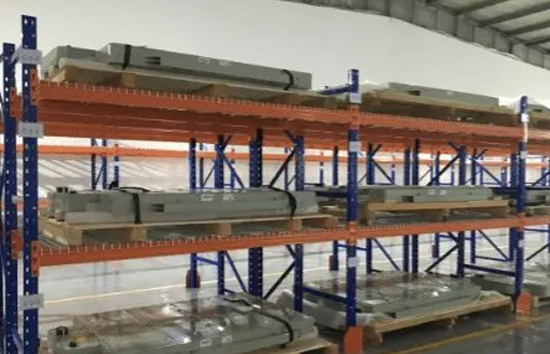
During production stages such as formation, capacity grading, and energy storage, lithium - ion battery are usually stored in large quantities in high - rack warehouses or production frameworks. If the safety management of enterprises is not in place, the factory passages are likely to be piled up with semi - finished products, finished products, and defective batteries, which significantly increases the fire risk.

Application effect

The development process of a fire can be roughly divided into the following stages: heat generation and temperature rise, smoldering, smoking and ignition, flame ignition, fire spread and expansion, and full - scale conflagration. As time passes, a fire breaks out.
Generally, common smoke and temperature detectors on the market will activate the alarm system only when there is combustion and smoking and the smoke concentration reaches certain conditions. This means it's an alarm after the disaster has started, and by then, significant losses have often been incurred. Such alarm systems are difficult to provide early warnings.
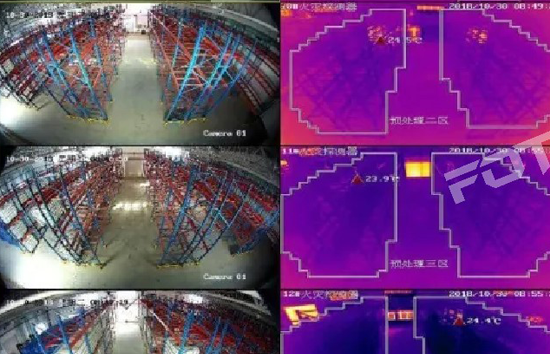
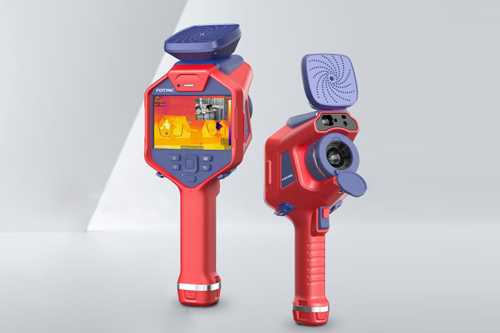
Leading enterprises that hold a leading position in the lithium - ion battery industry have made breakthroughs and innovations, strengthened the monitoring and early - warning mechanism, adopted Fotric thermal imagers, and established a thermal imaging fire - prevention early - warning and alarm monitoring system with precise temperature measurement. By real - time detecting the temperature data during the heat - generation and temperature - rise stage, it starts intelligent early - warning in the very early stage of fire development, taking preventive measures to nip the problem in the bud. This wins sufficient time for manual handling and greatly reduces the probability of fires.

Related Products
Pertinent articles
CopyRight©2025 www.grandautotech.cn AllRight Reserve.Shandong Guruida Automation Technology Co., Ltd.  ICP Filing No. 2025152452, Shandong-1  SiteMap
  • Phone:133 7531 8559
  • Address: Jinan City, Shandong Province
  • Copyright © Shandong Guruida Automation Technology Co., Ltd.
Top