Which is More Important: Water Dew Point or Water Content?
In the industrial world, moisture can cause a wide variety of problems. Although it may seem invisible, it can seriously damage equipment and affect manufacturing, storage, and transportation.
Generally, there are two methods for determining the moisture in a gas:
- a - Water dew point
- b - Water content
In this article, we will delve into the world of humidity control and explore which measurement method truly holds the key to achieving optimal performance and protecting processes.
We will mainly discuss the moisture in natural gas, although many of the same issues also apply to other industries. Moisture can affect the processing of natural gas, and dehydration is required to prevent problems. To address these impacts, dew - point analyzers are used, and natural gas is treated by methods such as adsorption and diethylene glycol absorption to remove moisture before transportation or use.
What is the Water Dew Point?
The water dew point is the temperature at which a gas is saturated with moisture. When a gas is full of moisture, it starts to turn into droplets. The dew point (the temperature at which a gas turns into a liquid) is important because at this temperature, there will be free liquid water in the gas stream. Liquid water is the cause of most problems in the natural gas industry. Therefore, knowing the dew - point temperature helps avoid the presence of liquid water.
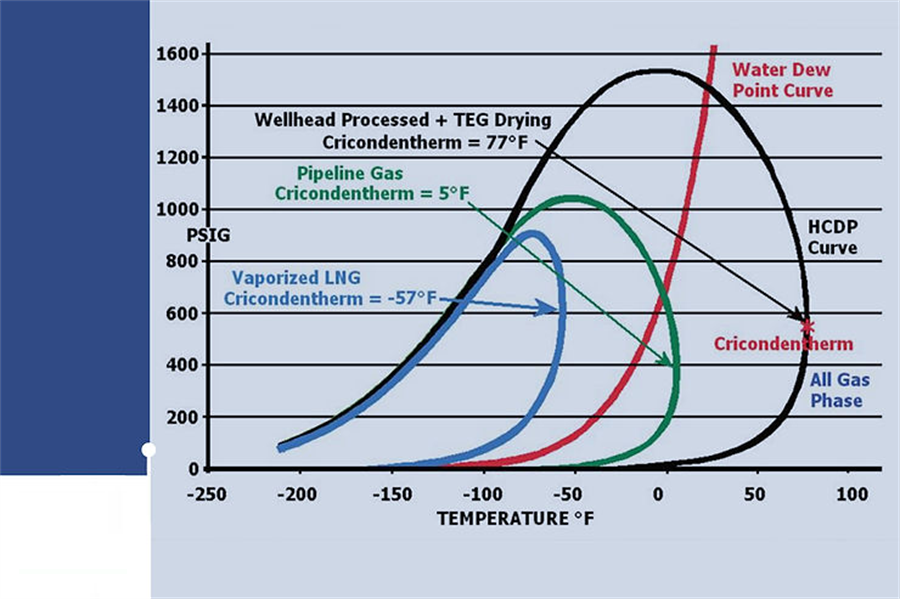
You see, as the temperature drops, the gas can't hold more moisture. So, when it reaches the dew point, it has reached its limit and can no longer hold more water vapor. At this point, the excess moisture starts to condense into liquid.
Understanding the water dew point is useful because it can help us prevent many problems. When moisture condenses, it can cause issues such as rust, mold, or failures in gas pipelines and power plant equipment. By paying attention to the dew point, we can take measures to avoid these problems and ensure things run smoothly.
The natural gas industry uses water dew point measurements in areas such as biogas, refineries, natural gas storage and distribution. This helps them control the moisture level and prevent any adverse side - effects that could affect their products or equipment.
How to Measure the Water Dew Point?
The only way to measure the water dew point is through a chilled - mirror device. The mirror is cooled until moisture starts to appear on its surface. The temperature at which this occurs is the dew - point temperature. The device carefully controls and monitors the temperature of the mirror to obtain an accurate reading.
Measuring the water dew point using a chilled mirror is a "first - principles" method because it is related to the fundamental principles of physical properties.
Dew - point analyzers are also considered one of the most accurate methods for measuring dew points. These devices provide precise and reliable readings. They are widely used in natural gas pipelines, refineries, gas storage facilities, gas distribution, biogas, city gates, and gas - fired power plants to effectively manage moisture and prevent problems caused by excessive moisture. Common problems include pipeline flow issues, corrosion and erosion, pressure drops, loss of energy content, equipment damage, etc. The water dew point has units of temperature.
Unfortunately, many vendors produce water content measurement equipment but mislabel it as a dew - point analyzer.
What is Water Content?
Compared to dew - point moisture, water content refers to the amount of water present in the gas. The units of water content used in the natural gas industry include ppm (parts per million), mg/NM³ (milligrams per normal cubic meter), or lbs/MMSCF (pounds per million standard cubic feet, mainly in the United States). Note that all these units specify how much water and how much gas there is. This is in contrast to the dew - point unit, which is simply temperature.
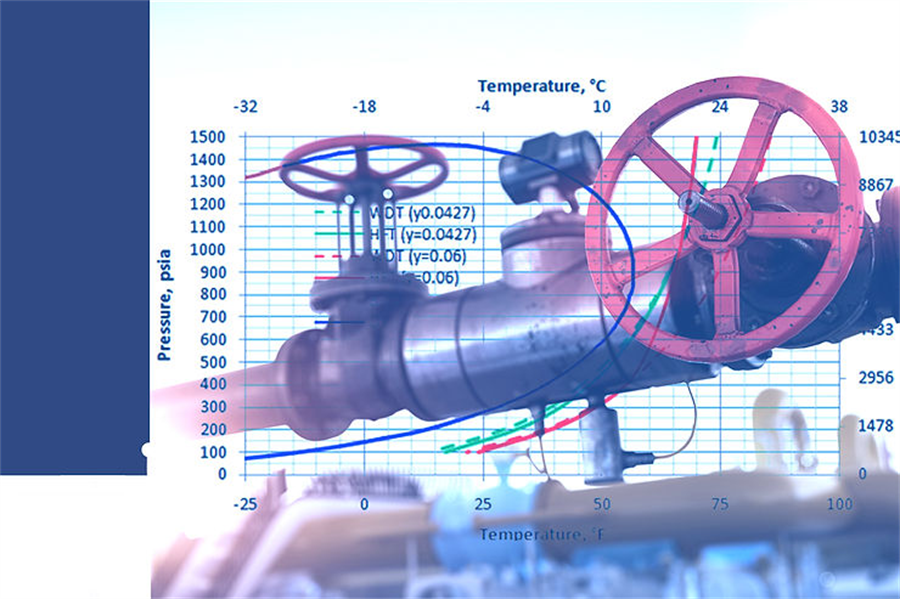
The amount of moisture is, of course, related to the water dew point. The higher the content, the higher the dew point at a given pressure. However, in the natural gas industry, the main significance of water content lies in its ability to calculate the dew point. This is because most problems are caused by liquid water.
How is Water Content Measured?
The methods for measuring water content vary depending on the type of material you are dealing with, and these methods are different from those for measuring the water dew point. Here are some commonly used methods:
Gravimetric method: Weigh the sample of the material, then dry the sample to remove moisture and weigh it again. The difference in weight tells you how much moisture is in the sample.
Moisture analyzer: This is a special machine that applies heat to the sample and measures the weight lost as the moisture evaporates. It gives the water content based on the weight loss.
Karl Fischer titration: This method is used for liquids. It involves a chemical reaction between the water in the liquid and a special substance. By measuring the amount of the substance used in the reaction, you can calculate the water content.
Electrical resistance: This method uses a probe or sensor inserted into the material. The water content affects the extent to which electrical energy can flow through the material. By measuring the electrical resistance, the water content can be determined.
Capacitance measurement: Similar to the electrical resistance method, this technique uses a probe with electrodes. The water content affects the way the material stores an electrical charge. By measuring the capacitance (the ability to store electrical energy), you can estimate the water content.
Quartz crystal measurement: When a voltage is applied, a quartz crystal vibrates at a specific frequency. The frequency changes with the weight of the crystal. The quartz crystal is coated with a hygroscopic (moisture - absorbing) material. The change in frequency is related to the amount of moisture in the gas stream.
Near - infrared spectroscopy: This method uses a special light close to infrared light. Different water levels in the material absorb this light in different ways. By analyzing the absorption pattern, you can estimate the water content.
Water Dew Point vs. Water Content
Water content and dew point are different measurement methods related to moisture, and here's how they perform in different aspects:
The water dew point is a "first - principles" measurement. In fact, water content analyzers need to be calibrated with dew - point analyzers to ensure their accuracy.
Regarding natural gas, almost all natural gas tariffs and sales agreements are written in terms of the dew point. In the past, reliable dew - point analyzers were cumbersome. However, with the advent of advanced technologies such as CEIRS™, the water dew point can be measured directly, accurately, and unambiguously.
In addition, the water dew point can be measured directly at process pressure, while most content measurement analyzers operate at lower (near - atmospheric) pressures.
Conclusion
Moisture can be specified in terms of either water dew point or water content. However, in the natural gas industry, the dew point is a key parameter in operational control. When choosing a method, the advantages and disadvantages of the selected method should be closely considered.














 Consultation Tel.
 Product Center
 Solution
 Home
Home